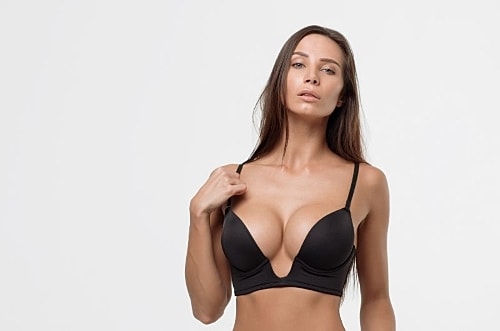
There was a time when the trend in plastic surgery was undeniable: bigger was better. If you were going to undergo surgery and pay for breast augmentation, you wanted a visible, dramatic transformation. But trends change, and so do our lives. We're seeing more women coming in not for enhancement, but for relief. They are looking to downsize, remove, or revise the implants they once loved.
It’s a complicated realization to come to. Initially, you might have been thrilled with your outcome. Maybe your partner loved them, maybe you finally filled out your bathing suits the way you wanted. But as the years pass, feelings can evolve. Regret isn't always immediate. It can creep in, and when it does, it’s important to know that you aren't stuck.
Let's look at why this shift is happening and, more importantly, how a board-certified plastic surgeon can help you reclaim a figure that feels right for who you are today.
For many women, the decision to downsize is physical. Large saline implants or silicone implants are heavy. Over time, gravity takes its toll. The weight of the implants can stretch the skin and strain the neck and back.
I’ve heard patients describe the relief of taking their bra off at the end of the day, only to realize the heavy feeling doesn't go away because the weight is internal. You might find that your breasts get in the way of exercise or make it difficult to find clothes that fit your shoulders and waist simultaneously. When your breasts become a hindrance rather than a confidence booster, it might be time to decide on a change.
There is also the emotional and mental aspect to consider. For some, having a medical device in the body becomes a source of anxiety. Breast implants are FDA-approved and safe for the vast majority of women, but a small number of patients have reported vague symptoms like fatigue, brain fog, or joint pain that they personally associate with their implants.
"Breast Implant Illness" (BII) is not an official medical diagnosis, but it is used to describe these patient-reported symptoms. Ongoing research has not established a direct causal link, but it is important to acknowledge and respect how patients feel and to evaluate each concern individually. In some cases, women may also experience capsular contracture, a condition in which scar tissue tightens around the implant, potentially leading to firmness or discomfort.
Questions about breast cancer are also common. To be clear, standard breast implants have not been shown to cause breast cancer. However, there is a very rare and highly treatable condition called breast implant–associated anaplastic large cell lymphoma (BIA-ALCL) that’s associated with textured implants. Even though the risk is incredibly low, awareness and appropriate monitoring help ensure patient safety and peace of mind.
Many patients feel that, aesthetically, the "fake look" is out. Some ultimately decide that implant removal is just the right choice for them. This may be due to personal preference, physical discomfort, or a desire to simplify their long-term care.
Your body has changed, especially if you got your implants a decade or two ago. You might have been pregnant, lost or gained weight, or simply aged. The implants that looked perky and appropriately proportioned at 25 might look out of place at 45. Gravity and thinning skin can cause the implants to bottom out or the breast tissue to sag over the implant (the "snoopy nose" deformity). No matter what the reason, it’s never too late to take out your implants if you decide that’s the best course of action.
If you're unhappy with your current look, the first step is a consultation with a doctor who listens. You need a surgeon who will help you determine the best choice for your anatomy, not just try to sell you another pair of implants.
An implant exchange is often the answer if you still want volume but want to lose the bulk. We can swap large, high-profile implants for smaller silicone implants or the newer "gummy bear" implants that hold their shape better. This reduces the weight while maintaining the fullness you still want to see.
Implant removal typically involves taking out the implant and, in some cases, the surrounding scar tissue (capsule). Many patients report feeling relieved after the procedure, particularly when their decision aligns with their overall health goals and peace of mind.
Here's the catch: if you remove large implants, you'll likely be left with stretched, loose skin. If you just take the implants out, the breasts may look flat or deflated. Basically, the wrapper is now too big for the contents.
In this case, a breast lift (mastopexy) is essential. A surgeon removes the excess skin and reshapes the remaining breast tissue to create a perkier, lifted appearance. You won't have the same upper-pole fullness you had with implants, but you will have a youthful, natural shape.
For those who want implants removed but definitely don’t want to end up completely flat, fat grafting is a fantastic middle ground. We use liposuction to harvest fat from your thighs or abdomen, purify it, and reinject it into the breasts. It’s like a completely personalized dermal filler, in a way. It adds a modest amount of volume, usually about a cup size, using your own tissue.
Realistic expectations. You have to have them. Surgery to fix implant regret is often more complex than the first set of implants. We’re dealing with stretched tissues, old scars, and changes in skin elasticity.
Recovery varies. If you are just having implants removed, it’s often quicker than the initial augmentation. But if you require a lift or fat grafting, you will be sore and need to wait a few weeks before returning to the gym. You will need support, both a good surgical bra and help around the house.
There's also the emotional outcome. It can be a shock to see your body change again. You might miss the "perkiness" of the implants at first, or worry that you look too small. Give yourself time. Most patients report an incredible sense of freedom once they adjust to their new, lighter figure.
Still on the fence, scrolling through Reddit horror stories about breast implant regrets? Stop. The internet is full of worst-case scenarios. Instead of scaring yourself, book a consultation. A board-certified plastic surgeon can examine you, look at your implant history, and give you an honest assessment.
If you feel your preferences have evolved, it’s important to know that options are available. Decisions about breast surgery are personal, and it’s completely okay for those choices to change over time. Your care should always support your health, comfort, and goals at every stage of life.